
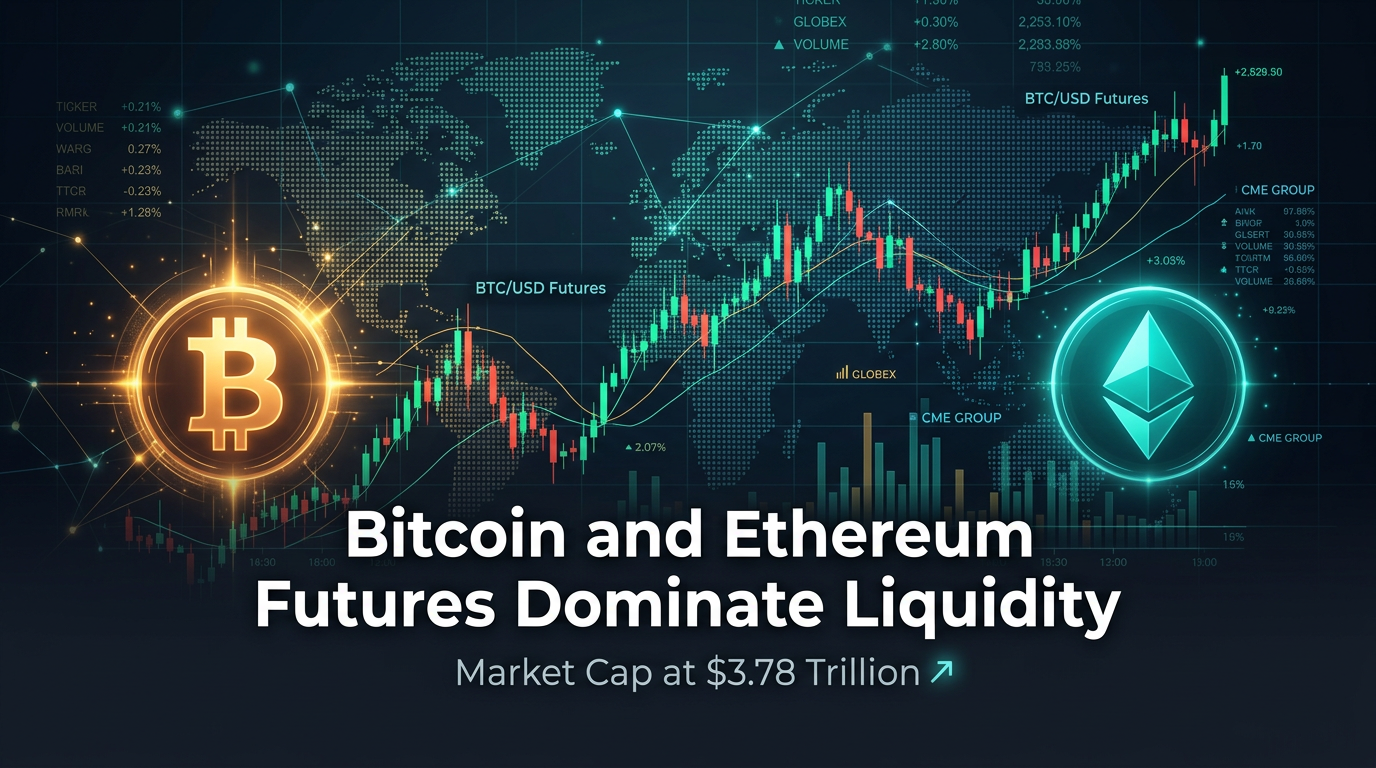
Market Snapshot: Liquidity-Rich, BTC-Led Environment
The crypto market on March 7, 2026 stands at a total capitalization of $3.78 trillion, supported by elevated 24‑hour volume that signals strong and sustained trader participation rather than a low‑liquidity grind. Bitcoin dominance at 63.9% confirms that most of the capital and risk-taking remains concentrated in BTC, while Ethereum holds a steady secondary share at 13.2%, underscoring its role as the primary altcoin benchmark.
This backdrop points to a constructive but BTC‑centric market structure: liquidity is deep, futures markets are active, and rotations are happening mainly within large caps rather than speculative microcaps.
Futures Volume: BTC and ETH as Core Hedging Engines
Bitcoin futures on the BTC/USDT pair post an impressive 24‑hour volume of $26.14 billion, cementing their status as the dominant liquidity and hedging instrument in the digital asset space. This level of activity reflects active positioning by both directional traders and sophisticated participants such as market makers, arbitrage desks, and hedged spot holders who rely on BTC futures to manage risk.
Ethereum futures (ETH/USDT) record a solid $15.38 billion in volume, clearly strong but still secondary to Bitcoin flows. This confirms that while ETH remains the leading smart‑contract asset and the main altcoin proxy, the bulk of leverage and macro‑driven trading decisions are still anchored in BTC.
Market Structure: Rotation Within Strength, Not Panic
The combination of high total market cap, strong 24‑hour volume, and pronounced Bitcoin dominance suggests a market that is risk‑on but selective. Instead of broad, indiscriminate buying, capital appears to be rotating among the largest, most liquid names—primarily BTC, then ETH—while smaller caps likely see more uneven flows.
This environment is typically associated with:
- Constructive trend conditions where dips in BTC and ETH attract buyers, supported by deep derivatives liquidity.
- Ongoing use of futures for hedging and leverage, which can amplify short‑term volatility but also provides clean trading opportunities for intraday and swing participants.
- A market phase where institutional and professional flows matter more than pure retail speculation, given the scale of BTC and ETH futures volumes.
What This Means for Traders and Investors
For active traders, BTC and ETH futures remain the primary venues for expressing bullish, bearish, or hedged views, thanks to their tight spreads, deep order books, and high notional turnover. Scalpers and intraday traders can use this liquidity to execute precise entries and exits, while swing traders benefit from clear price discovery and robust derivatives data.
For investors, the high dominance of Bitcoin and the strong share of Ethereum indicate that market confidence continues to cluster around these two assets as core long‑term holdings. The current structure favors portfolios that keep BTC and ETH as the foundation, using selective exposure to other large caps rather than aggressive overextension into illiquid altcoins.
If you share your target audience (beginners vs advanced traders), I can refine this into a more tailored, long‑form SEO blog with headings, meta description, and keyword list.




Leave a Reply